Enki Updates
Feb 19, 2026
Lelystad and the Energy Cost of AI Compute | Project Enki

Youp Overtoom
Contributer
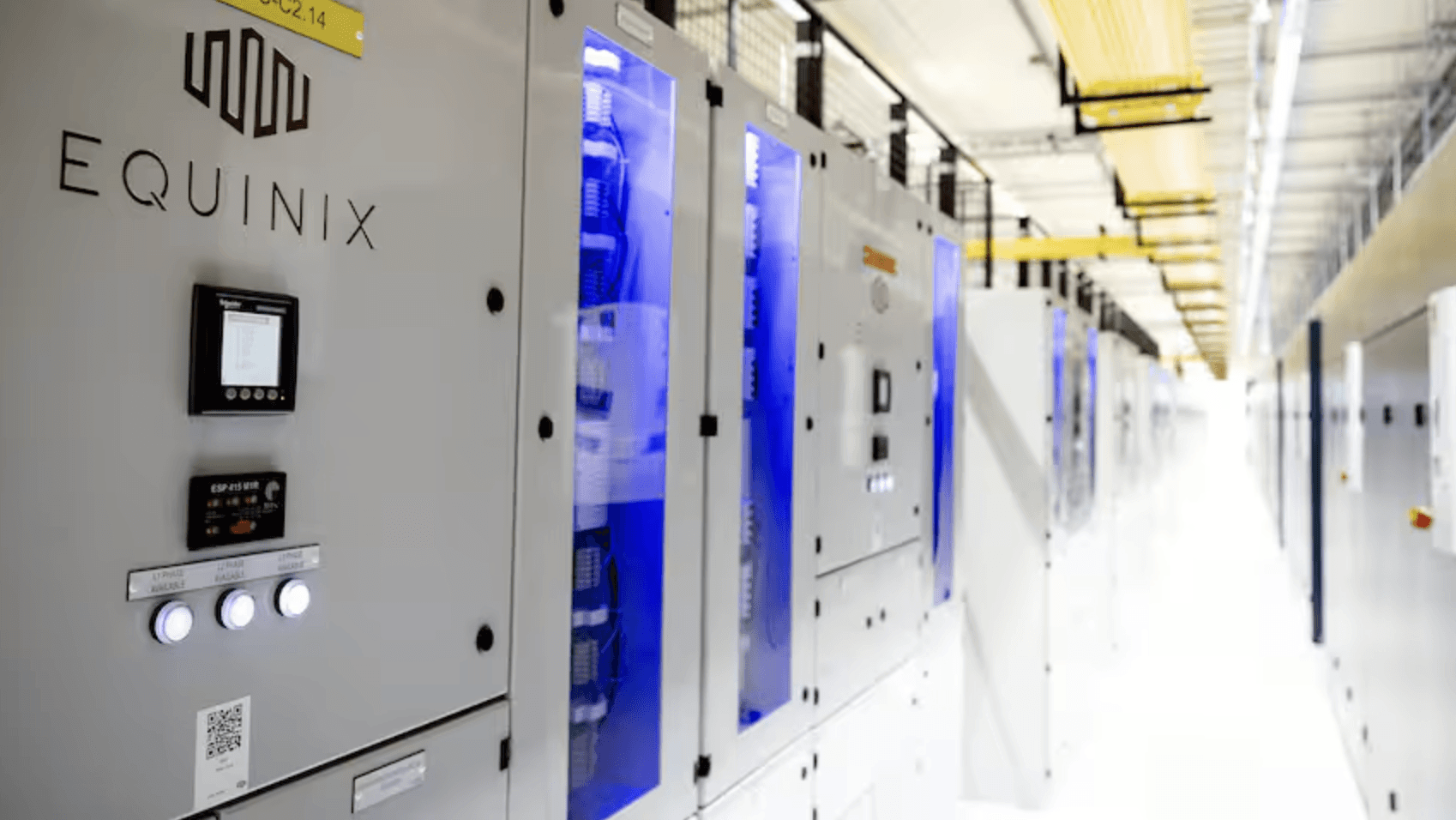
A planned Equinix data centre at the Flevokust Haven site in Lelystad, Netherlands will consume electricity on a scale comparable to the entire current annual consumption of the city’s residents and businesses — far more than local councillors were led to expect when approving the project years ago. Initial energy estimates communicated to municipal decision-makers suggested a load similar to 3,000–5,000 households, but independent expert calculations now indicate consumption equating to roughly 200,000 households (with peak estimates potentially higher). The discrepancy has triggered local political backlash and raised questions about transparency in planning and energy impact assessments. (Reddit)
ALSO READ: Dutch Data Center Rule Gap Explained
Structural Context
1) Rapid Scaling of Data Centre Electricity Demand
Dutch data centre energy consumption has been rising sharply: statistics show that data centres in the Netherlands consumed about 5,100 GWh in 2024 — roughly 4.6 % of the nation’s electricity — a notable increase over recent years. (Centraal Bureau voor de Statistiek)
This reflects a broader trend across advanced economies, where large compute facilities — especially those supporting cloud, AI and enterprise workloads — require tens to hundreds of megawatts of continuous supply. Global research indicates that data centre electricity demand could approach nearly double by 2030 due to AI-driven expansion. (Wikipedia)
2) Regulatory and Planning Gaps
The Lelystad project was approved under a 2021 zoning plan with modelling that significantly underestimated its grid impact. Local officials reported they were told the energy demand would be limited — a characterization that proved far below actual consumption projections now attributed to the site. Equinix’s design also sidestepped a national moratorium on large data centre siting by virtue of its footprint, despite exceeding energy intensity thresholds that triggered Dutch policy limits. (Dutch IT Channel)
3) Transparency and Grid Awareness Deficits
The reporting underscores repeated instances in which municipal authorities lacked both the technical expertise and access to robust energy impact data when reviewing infrastructure applications. Council members expressed surprise at the scale of projected electricity use, revealing a systemic communication failure between developers, planners and stakeholders. (Reddit)
Enki Perspective
1) Energy Constraints Are the Core Limiting Factor for Compute Expansion
This case exemplifies a structural truth often overlooked in digital infrastructure planning: access to reliable, available power — not just grid connectivity — defines where compute can sustainably grow. The sheer scale of projected consumption at Lelystad demonstrates that data centre developments must be anchored in actual power availability and transmission capacity, not merely municipal approvals.
2) Misaligned Assessments Undermine Infrastructure Discipline
The stark difference between initial estimates and expert calculations highlights a breakdown in energy impact assessment frameworks. Institutional planners and regulators need tools and standards that realistically model how modern compute — especially high-density and AI-aligned workloads — draw energy. Underestimating energy demand leads to poor grid planning, latent congestion, and ultimately, constrained deployment of both compute and other economic activity.
3) Power Availability Must Drive Siting Decisions — Not Vice Versa
The Lelystad example shows what happens when infrastructure siting decisions precede rigorous power alignment: communities assume negligible impact, only to confront future supply challenges. Project Enki’s thesis — that AI infrastructure should be deployed where power is available, not where grid access merely allows — is reinforced here. Strategic colocation with underutilized generation and robust transmission avoids these misalignments, mitigates grid risk, and ensures compute growth does not compete with residential and industrial needs.
4) Market and Policy Signals Need Alignment with Grid Realities
Policymakers must recalibrate data centre moratoria and energy planning policies to reflect actual consumption patterns and future demand curves. A national moratorium that can be avoided through sizing tricks, as seen in Lelystad, signals a regulatory framing that treats energy impact superficially rather than systemically. National and regional planning bodies should integrate power availability metrics and future load forecasting into infrastructure approval pathways.
5) Energy-Aligned Compute Is Foundational to Sustainable Digital Growth
This reporting highlights that digital infrastructure is deeply intertwined with physical energy systems. For digital economies to grow sustainably — without compromising grid resilience or local energy access — models like Enki’s, which monetize stranded or underutilized energy by colocating compute with generation capacity, must become standard practice. Compute must follow energy — not the other way around.
Source article:
https://www.nu.nl/klimaat/6385416/datacenter-slurpt-straks-meer-stroom-dan-heel-lelystad-raad-wist-van-niks.html (nu.nl)
ALSO READ: Public Acceptance as Europe's Next Compute Constraint