
AI Infrastructure
The Gas Pivot and the Power Bottleneck

Youp Overtoom
Marketing Director
What Happened
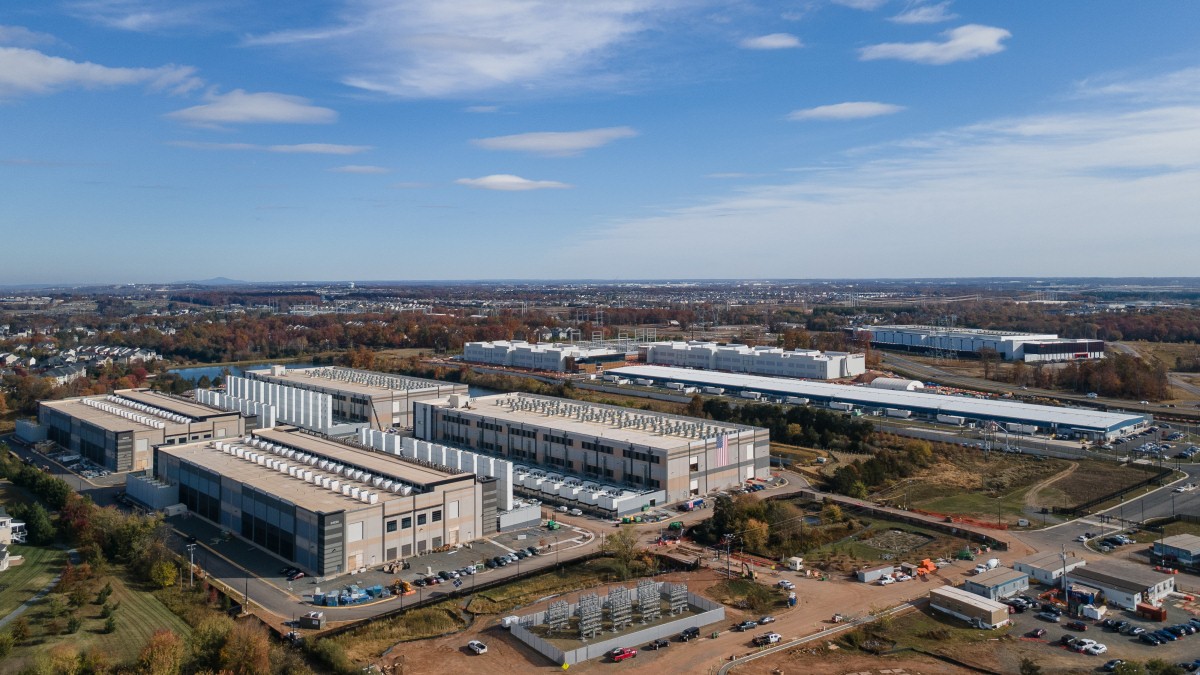
Reporting referenced across Ars Technica, drawn from a WIRED analysis of air permit documents, examined gas power projects tied to eleven major data center campuses in the United States. Those projects serve AI infrastructure connected to OpenAI, Meta, Microsoft, and xAI. On paper, the combined permitted emissions exceed 129 million tons of greenhouse gases per year, a figure that surpasses the 2024 national total for Morocco.
Research from Global Energy Monitor shows the scale of the shift. Behind the meter natural gas capacity in the US data center development pipeline grew from roughly 4 gigawatts in early 2024 to nearly 100 gigawatts at the start of 2026. Several additional projects exceeding a gigawatt in capacity have been announced since that research was published.
In March, operators associated with several listed projects signed the Ratepayer Protection Pledge, an informal industry commitment to build, bring, or buy their own power generation. Reporting also notes that demand has created a shortage of the most efficient turbine models, pushing some developers toward older equipment with higher emissions per megawatt hour.
Structural Context
The shift toward dedicated, behind the meter generation is not a strategy choice. It is a response to a binding constraint. AI compute demand is expanding faster than transmission capacity can be built or upgraded. Interconnection queues in major US markets now extend several years. Permitting timelines for new high voltage lines routinely exceed a decade. Developers that depend on traditional grid access face delivery risk that is incompatible with the investment cycles of frontier AI.
Natural gas turbines offer something the grid currently cannot provide at the required pace: firm, dispatchable megawatts delivered inside project timelines. That explains the sudden pipeline growth, and it also explains why turbine supply has tightened so quickly. The sector is procuring whatever can be energized on a credible schedule.
Beneath the emissions headline, the deeper story is about system design. The location of compute is being determined by where firm power can be secured on time, not by where the grid theoretically permits it. Generation is being attached directly to load because the wires in between are the real bottleneck.
The Enki Perspective
Project Enki reads this development as confirmation of a structural thesis rather than a surprise. The expansion of advanced compute is now gated by access to power, and operators are responding rationally by moving infrastructure closer to generation. The behind the meter pivot is, in effect, the industry acknowledging that future compute capacity will be built where electrons are available on realistic timelines.
The question that follows is which form of generation the sector chooses. Gas turbines solve the timing problem at the cost of emissions, fuel exposure, and extended payback horizons. Stranded and curtailed renewable energy solves the same timing problem with a different cost profile. Offshore wind that cannot fully reach onshore demand, solar and wind output that is dispatched down because transmission is saturated, and generation sites with interconnection capacity that the surrounding grid cannot fully absorb all represent firm, underutilized electrons waiting for a proximate load.
Enki converts that stranded energy into scalable AI infrastructure by siting modular compute capacity at the point of generation. The investment logic is the same as the gas pivot. The emissions trajectory, fuel risk, and public reception profiles are different. Seen this way, the current gas buildout and the energy aligned compute model are parallel responses to the same underlying constraint, developing on different time horizons and with different durability characteristics.
What This Signals
The first signal is that behind the meter deployment is no longer an edge case. It is becoming a default architecture for large AI campuses in the United States, and the same logic will travel to other markets where grid expansion trails compute demand, including much of Europe.
The second signal concerns the emissions trajectory of the industry. Commitments made in earlier cycles were calibrated to a slower growth environment. The current rate of deployment is putting those commitments under quantifiable pressure. That creates room, and likely appetite, for infrastructure models that can deliver the same operational certainty with a cleaner fuel profile and without placing additional load on shared ratepayer networks. Institutional capital is already signaling a preference for repeatable, energy aligned formats that can be financed across multiple sites.
The third signal is geographic. As the sector moves toward generation, regions with significant stranded or curtailed renewable capacity become strategically relevant in ways that traditional data center maps do not yet reflect. Offshore wind zones, grid constrained renewable corridors, and markets with active curtailment become credible candidates for compute siting. This is where digital sovereignty and energy sovereignty begin to converge, and where the next phase of AI infrastructure is most likely to be built.
Bron: author not listed, April 2026 https://arstechnica.com/ai/2026/04/greenhouse-gases-from-data-center-boom-could-outpace-entire-nations/