
Grid Systems
Lelystad Reveals the Real Bottleneck in Dutch Compute Expansion

Youp Overtoom
Marketing Director
Lelystad and the Power Question Behind Every New Data Center
A major Equinix facility in the Netherlands exposes the structural gap between compute demand and energy planning at the local level.
What Happened
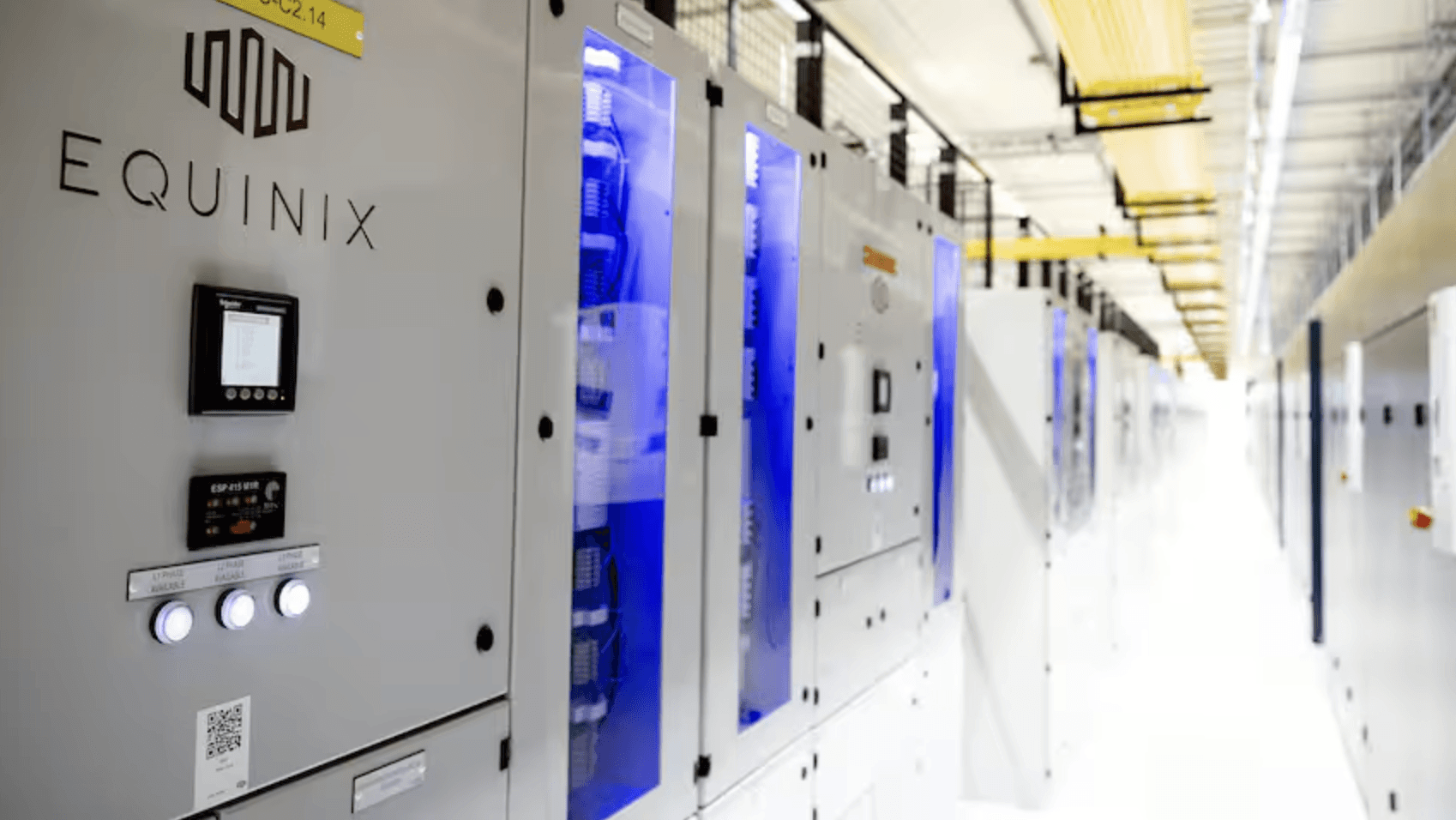
Equinix, one of the largest data center operators in the world, is building a new facility on the Flevokust Haven industrial site near Lelystad in the Netherlands. The project was approved by the local council in 2021 with broad support. At the time, officials estimated the energy demand to be comparable to that of 3,000 to 5,000 households.
That estimate has since been revised dramatically. According to energy expert Enzo Diependaal, commissioned by NU.nl, the facility's actual consumption will be closer to what 200,000 households use. The municipality itself now acknowledges an expected annual consumption of roughly 753 gigawatt hours at full capacity, which is nearly double the current electricity use of all residents and businesses in Lelystad combined. The original figure, described internally as a rough estimate, understated the energy footprint by a factor of 40 to 66.
Multiple council members have since stated they did not fully understand the energy intensity of the project when they voted. The political fallout has been significant, with several parties now demanding answers about how the miscalculation occurred.
Structural Context
The Lelystad case illustrates a recurring pattern across Europe. Data center development is accelerating, but the institutional frameworks meant to govern it have not kept pace. In the Netherlands, a national moratorium introduced in 2022 restricts new hyperscale data centers with a capacity above 70 megawatts and a footprint of at least 10 hectares. The Equinix project, at 150 megawatts but only 7.5 hectares, falls outside this threshold. The regulation was designed around physical size rather than energy intensity, leaving a structural gap that projects of this scale can pass through.
This is not a failure of any single operator. It reflects the broader challenge of governing compute infrastructure through legacy spatial planning tools. Energy demand, not land area, is the defining characteristic of modern data center development. Until regulatory frameworks are redesigned around power consumption as the primary variable, similar mismatches will continue to emerge across European jurisdictions.
Equinix has stated that the facility will draw power directly from the nearby Maxima gas fired power station and a TenneT high voltage substation, avoiding additional load on the regional distribution grid. This approach of co locating with generation assets is structurally sound. It acknowledges that the distribution network is not the right channel for delivering power at this scale.
The Enki Perspective
What happened in Lelystad is a clear example of the mismatch between how energy intensive infrastructure is planned and how it actually operates. The demand for compute is real. The capital is available. The operators are ready to build. But the energy planning layer, particularly at the municipal level, is not equipped to evaluate or absorb these projects.
This is precisely the structural condition that Project Enki was designed to address. When infrastructure moves toward generation rather than relying on congested grid connections, the entire deployment model changes. Stranded and curtailed renewable energy, abundant across Northern Europe and increasingly underutilized, offers an alternative foundation. Infrastructure that is aligned to where power is produced, rather than where grid access happens to be available, avoids the bottlenecks that surface in cases like Lelystad.
Modular, energy aligned infrastructure also changes the conversation at the local level. Instead of asking whether a municipality can absorb a new facility onto its grid, the question becomes whether generation capacity exists to serve it independently. That reframing turns energy surplus regions from passive bystanders into active participants in the digital economy.
What This Signals
The Lelystad situation is not an isolated incident. It is a preview of what will happen repeatedly as AI driven compute demand continues to scale across Europe. Grid congestion is already a defining constraint in the Netherlands, and transmission expansion timelines stretch years into the future. Every new facility that depends on distribution level grid access will encounter similar friction.
The broader signal is clear. The current regulatory architecture, built around land use and spatial planning, does not capture the energy dimension of modern data center development. Policymakers across the EU will need to develop frameworks that treat power demand as the primary planning variable, not an afterthought estimated in rough terms.
For the infrastructure sector, the implication is equally direct. Projects that can demonstrate energy independence, whether through proximity to generation assets or through integration with underutilized renewable capacity, will face fewer permitting obstacles, shorter timelines, and stronger alignment with both national grid strategies and institutional capital requirements. The future of compute infrastructure belongs to those who solve the power question first.
Source: February 2026 https://www.nu.nl/klimaat/6385416/datacenter-slurpt-straks-meer-stroom-dan-heel-lelystad-raad-wist-van-niks.html